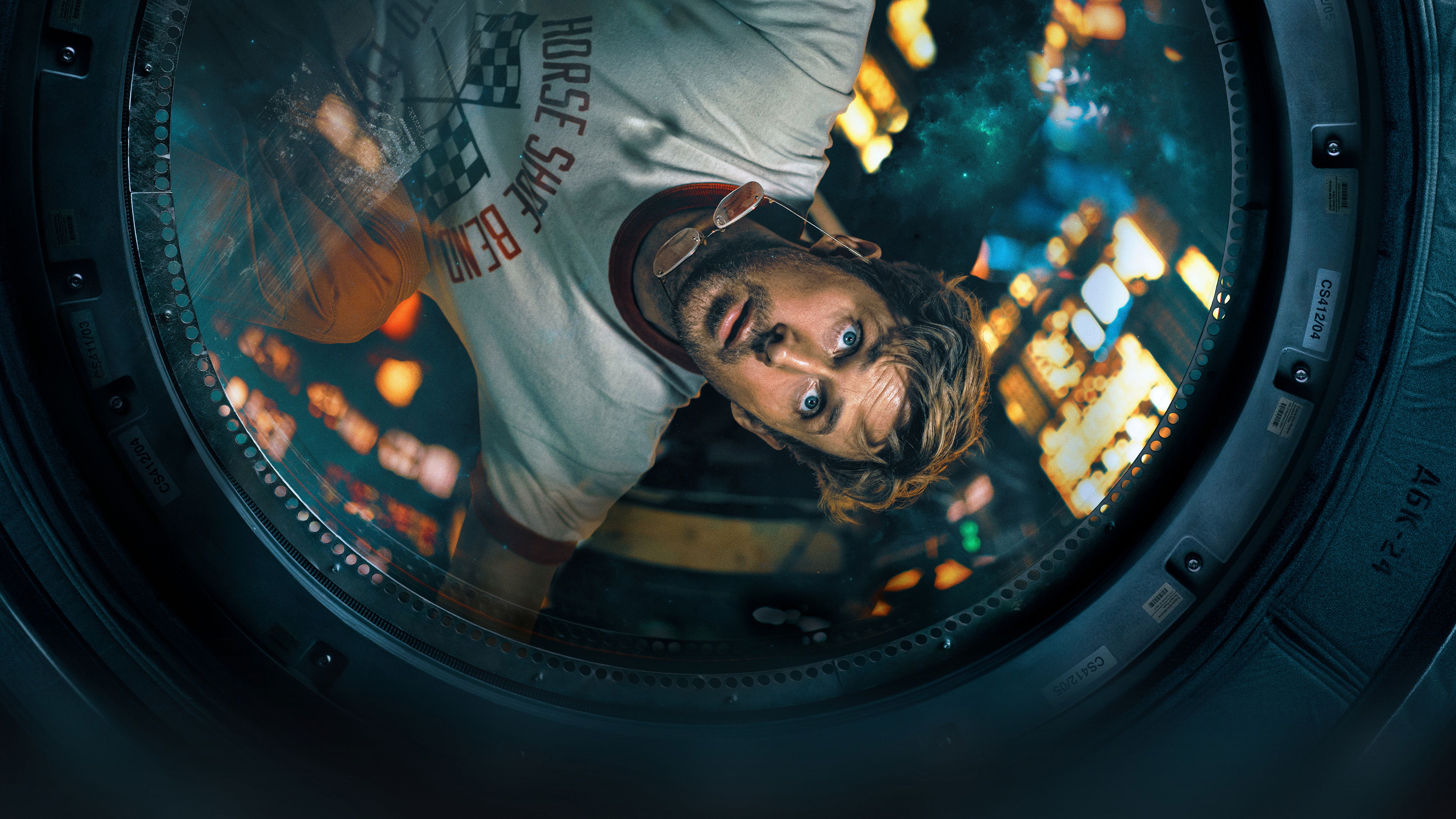
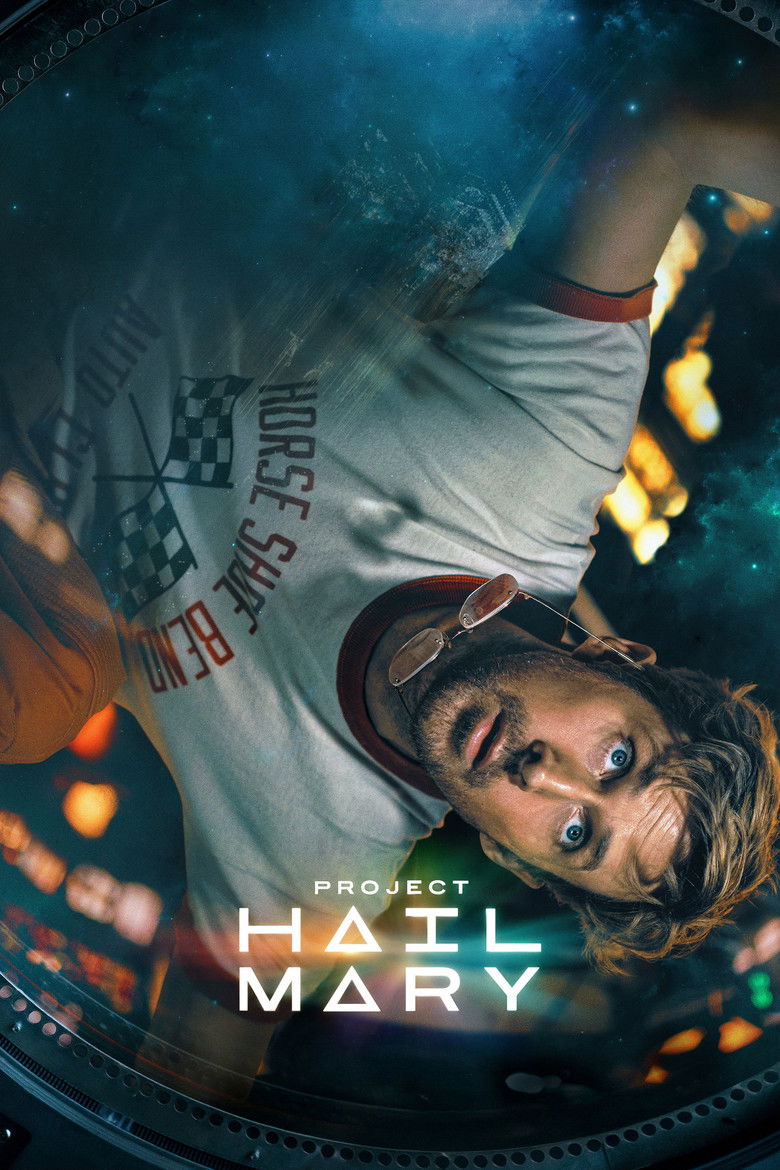
Waking up in the absolute void, with no memory, and carrying the weight of saving humanity on your shoulders. This setup had everything to be just another generic sci-fi flick we forget about a week later, right? But "Project Hail Mary" tries to pull the rug out from under us by mixing the coldness of space with an unlikely tale of friendship. The result is a ride that hits a few narrative potholes but definitely won't leave anyone indifferent. Let’s break down what actually works and what got lost in orbit in this blockbuster.
Doing a movie where the lead spends most of the time alone talking to thin air is a trial by fire for any actor, and Ryan Gosling passes with flying colors. He delivers a near-perfect mix of constant vulnerability, sharp wits, and his signature sarcastic humor. Watching this guy transition from a scared teacher to the reluctant savior of humanity really hooks you. Gosling uses that blank stare and little nervous tics to show the panic he’s trying to hide behind jokes. We care about Grace’s headspace because his fear is palpable. He’s not a trained action hero; he’s just a regular dude trying not to lose his mind in the cosmic void.
This brutal isolation on the ship gets a lot heavier when the movie cuts to Grace’s memories. While the space setting is suffocating and tight, our planet, in the flashbacks, is a slow-motion picture of despair. Earth is freezing over. To show this, the script hits the bullseye by giving Sandra Hüller room to shine as Eva Stratt, the leader of the global task force. Hüller is chilling. She makes ruthless, almost cruel political decisions, bulldozing over laws and human rights to try and save the species. This cold government vibe perfectly justifies the protagonist's desperation. We get that there’s no way around it: either he pulls this off, or that freezing, militarized planet is simply going to cease to exist.
If Earth brings the human tension, it’s the interspecies friendship that injects real life into the story. When the character Rocky shows up, the movie reaches a whole new level. He’s not your typical humanoid alien. He’s an Eridian—basically a giant spider made of rocks that breathes ammonia and lives in the dark. And surprisingly enough, he completely steals the show.
Building this relationship is one of the script's highest points. They break through massive language and physical barriers, starting with suspicion, shifting into the scientific method, and arriving at a deep sense of empathy. It’s super rare to see mainstream cinema treat "first contact" with this much patience. No shooting, no invasion. Just two terrified beings from different galaxies trying to figure out how to help each other.
Speaking of figuring things out, fans of Andy Weir's book always talk about the insane amount of hard sci-fi in the story, and the movie doesn't shy away from that. A huge chunk of the communication and problem-solving between Grace and Rocky happens through math and physics. They draw makeshift graphs, build scale models, and put theories to the test. For anyone who loves a good science puzzle, watching these two crunch numbers so they don't burn to death or suffocate is a treat. The science here isn’t just window dressing; it’s the actual language connecting the two species.
But it’s exactly in this attempt to balance serious science with looming tragedy that my skeptical side kicks in. The movie tries to juggle too much at once. Directors Lord and Miller bring their trademark humor, but in the context of a global apocalypse, the mix sometimes turns sour. There are moments when the stakes are sky-high, the ship is falling apart, and suddenly Grace cracks a joke that feels straight out of a Sunday afternoon sitcom. It breaks the immersion instantly.
On the flip side, the movie leans so hard into optimism and melodrama that it borders on artificial. Some of the final scenes are so obviously engineered to make us cry—with the music swelling and lingering stares—that it kind of backfires. For viewers who aren't as prone to emotional manipulation, all this sweetness feels a bit too cheesy. It strips away the gravity and weight of a mission that, at its core, should be dirty, traumatizing, and practically a suicide run.
If the tone wobbles, the aesthetics grab the wheel tight. You really can't fault the art direction. The cinematography does a brilliant job contrasting the pitch-black universe with the yellowish, utilitarian interior of the Hail Mary. There’s a constant feeling of thermal claustrophobia—you can practically feel the heat of the engines and the cold of the glass.
Thankfully, the design team went for a fantastic balance of practical and digital effects. The textures of Rocky’s engineering, the way the Eridian ship looks like a giant mineral clock... all of it dodges that plastic, generic, weightless CGI we usually get in summer blockbusters. Things actually look like they have mass; they feel heavy.
And since we’re talking about the physicality of the ship, it’s impossible to ignore the sound design. Because Eridians communicate through musical tones, the soundtrack couldn't just be some sweeping background instrumental. The music is literally part of the dialogue. The movie uses chord progressions and vibrations that constantly talk back to the metallic clanks of the ship. It’s smart, immersive sound work. A lot of the time, we understand what Rocky is feeling—anger, joy, fear—just from the texture and frequency of the chords he plays, without needing Gosling to spoon-feed and translate the emotion every five minutes.
Going back to how it compares to the source material, the adaptation tried so hard to stay true to Weir's scientific detail that it forgot to watch the clock. This is the movie’s Achilles' heel: the pacing. Clocking in at over two and a half hours, the second act really drags. The script spends so much time on little lab experiments aboard the ship that the story runs out of steam. It lacks real thrills and emotional nuance in the middle of the journey; that classic gut-punch feeling that something irreparable might happen ends up feeling numbed.
Worse still, the overall structure leans on a pretty derivative skeleton. Putting the brilliance of the central relationship aside, the backbone of the plot is a bunch of tropes we've seen dozens of times in other space movies. The last-minute sacrifices, the engine failures, the race against time. The movie doesn't really innovate much there, choosing to lean on formulas that have already been tried and tested by the genre.
At the end of the day, Project Hail Mary is a cinematic experience with very obvious highs and lows. It knocks it out of the park with its stunning visuals, brilliant sound, and the patient building of a charismatic duo that you genuinely root for. The issue is when it trips hard over an overly long runtime and a melodrama that waters down the harsh reality of the end of the world.
It’s a movie with its heart in the right place—maybe even a bit too optimistic for its own good. Is it worth your time? Absolutely. Find the biggest screen and the best sound system you can, take the ride, and see for yourself. Just go in knowing you aren't going to get a narrative revolution in sci-fi, but rather a comforting, human-and-alien adventure looking to find warmth in the coldest part of the universe.