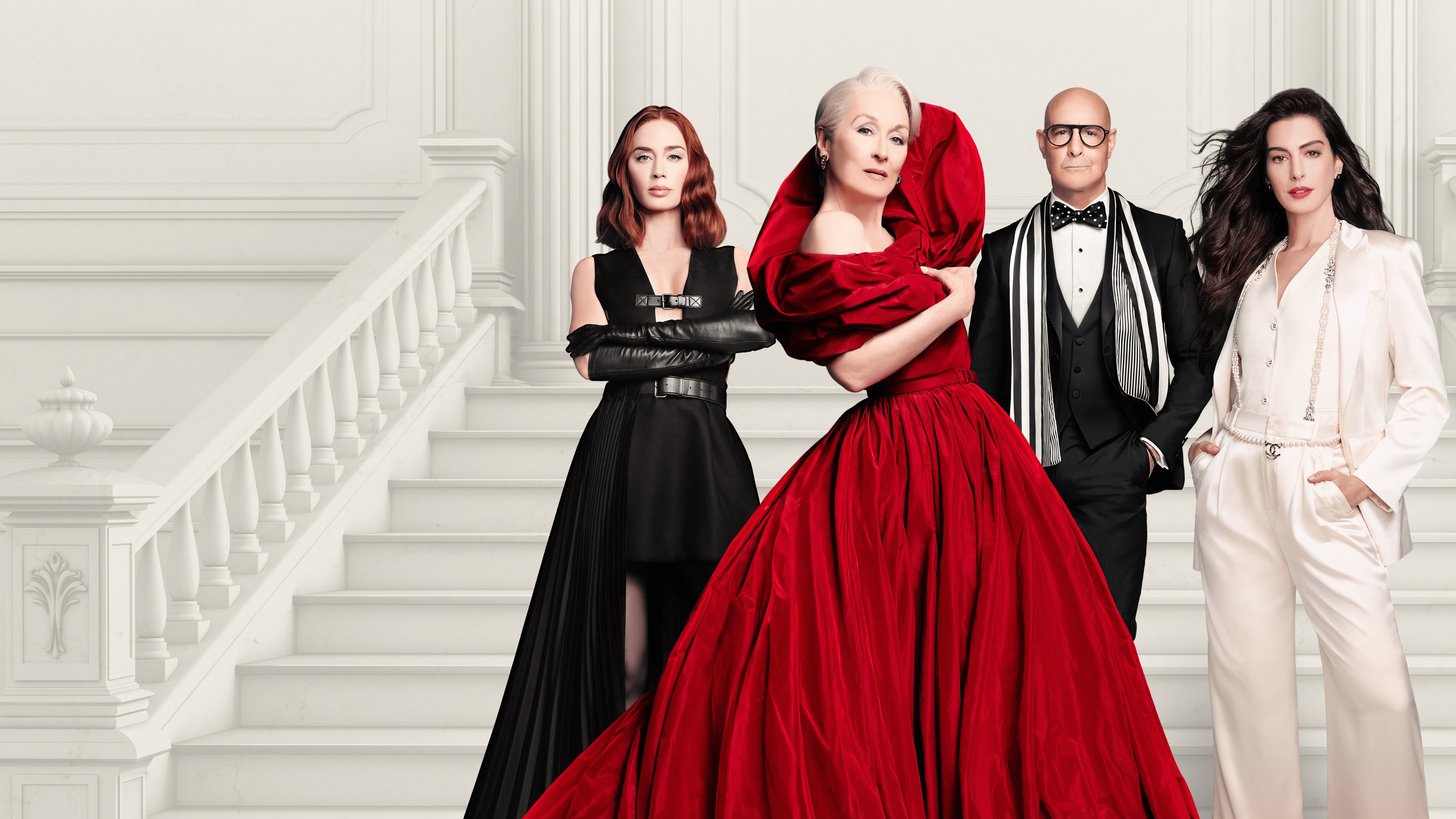
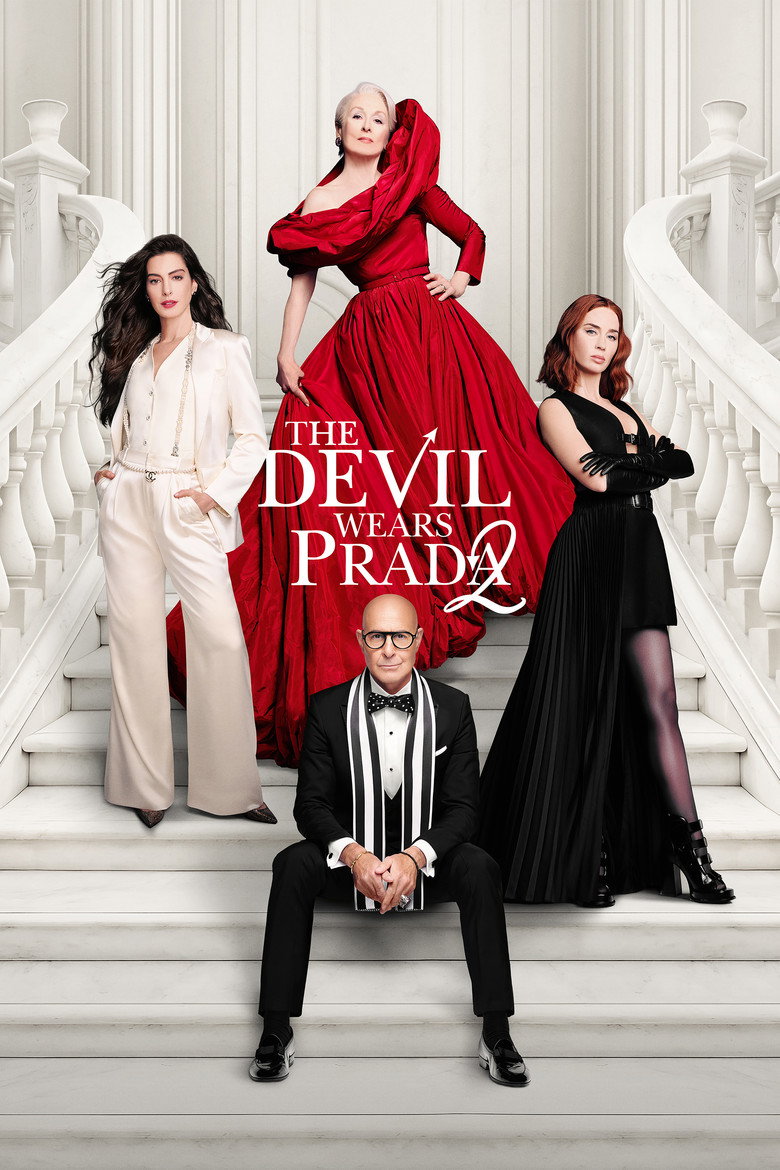
Andy Sachs returns to Runway as Miranda Priestly navigates a new media landscape and Runway's position within. The duo reconnect with former assistant Emily Charlton, now the head of a luxury brand that possesses funding which could ensure Runway's survival.
When 20 years pass between a movie and its sequel, a lot of disappointment can result when the follow-up is at last released. Derivative, underdeveloped story threads and an overreliance on nostalgic strolls down memory lane often abound, leaving viewers suitably underwhelmed, especially loyal fans of the source material. However, every so often, audiences are the lucky beneficiaries of pleasant surprises, movies that live up to their billing and come close to matching the magic of their predecessors. Such is the case with director David Frankel’s long-awaited answer to the iconic 2006 comedy “The Devil Wears Prada,” a delightful blend of the elements that made the original such a success, skillfully mixed with enough new material to create a work all its own. This latest offering follows what happens when the iconic Runway fashion magazine, led by longtime editor/diva in residence Miranda Priestly (Meryl Streep), finds itself in hot water for unwittingly publishing an offensive article in praise of a clothing manufacturer that’s essentially an exploitative sweat shop, placing the publication’s and editor’s future in jeopardy. To effect damage control, Runway quickly hires award-winning journalist Andy Sachs (Anne Hathaway) to come on board as the magazine’s new features editor. Andy’s hiring proves propitious for her, having just been unexpectedly laid off from her job (despite her recent accolades), and for Runway, given her familiarity with the magazine, having once worked there, ironically, as Miranda’s often-put-upon assistant. Having now been thrown together under these trying circumstances, the confrontational duo struggles to make things work out, an ordeal that eventually culminates in a battle in which multiple parties vie for ownership of the publication. Joining the fray in this rollercoaster scenario are Miranda’s trusty righthand man, Nigel Kipling (Stanley Tucci), Andy’s onetime condescending rival, Emily Charlton (Emily Blunt), and an array of Runway assistants, staffers and interns, along with a host of friends, foes, competitors and celebrity cameos including appearances by the likes of Lady Gaga, Lucy Liu and Kenneth Branagh. The narrative generally flows smoothly, if a bit episodic and compartmentalized at times, with more than its fair share of laughs, vibrant fashion montages, gorgeously shot location settings in New York and Milan, and a frank, bitingly honest appraisal of how the publishing business has “changed” (i.e., declined) in the two decades since the original film. “The Devil Wears Prada 2” likely won’t go down in the annals of filmmaking as an enduring piece of cinema, but it certainly makes the grade as a capable, entertaining sequel that isn’t the kind of letdown that so many of its celluloid peers often are. Indeed, as Miranda would likely sum it up, “That’s all.…”

Much as I did quite enjoy this, it isn't a patch on the first outing for those at "Runway" magazine two decades ago. It seems that boss "Miranda" (Meryl Streep) has somewhat lost her touch and after a major in-print faux-pas, she is on the defensive with a publisher who needs her to eat some humble pie and appease disgruntled advertisers. To make matters worse, he imposes a new features editor in the form of her erstwhile second assistant "Andy" (Anne Hathaway) who has recently been the victim of some downsizing at her previous employer. Luckily for this unwelcomed new arrival, the debonaire "Nigel" (Stanley Tucci) is still around to try and smooth the path for her as she treads on some eggshells more delicate than those from Karl Fabergé. One of those they have to keep sweet is Dior, and guess who has taken the reins there? Yep - the original "Emily" (Emily Blunt) who is savouring her opportunity to make her former boss squirm. "Andy" is going to have to pull off something big if she is to impress her sceptical and aloof boss - a task made all the more difficult when their publisher dives head first into the consommé and his son espies an opportunity to employ some consultants to "streamline" this most lavish of publications. Will they unite to fight? Can they even trust each other? What was missing for me in this was an imperiousness from Streep. Her cutting one-liners and superiority complex are just too limited and humanised here - thanks in part to partner "Stuart" (Sir Kenneth Branagh), and her character spends altogether too much time on the back foot. Hathaway and Tucci reprise their roles well enough but the altered dynamic between "Andy" and a too peripheral "Emily" didn't quite work so well for me. Too much emphasis is made on the access the production has had to real high-fashion shoots, to real celebrity contributors and to the authentic glamour of the industry whilst the lacklustre story is rather left to find it's own way. Clearly, there is a valid point to be made regarding the compromising of journalistic values by automating so many of the creative processes for both simplistic and financial purposes, and this presents the pitfalls of those increasingly prevailing attitudes and of the public's apathy effectively at times - even if the sheer profligacy of this business might prove a little hard to stomach if you can't pay your electric bill. It's still an enjoyable dose of escapism but as in her meetings where "Miranda" is constantly being reined in by her politically correct assistant, this has been neutered and has lost a fair degree of it's sharpness.
Check out my full review @ https://www.manuelsbento.com/the-devil-wears-prada-2-2026-a-radiant-witty-sequel-that-successfully-tailors-nostalgia-for-the-modern-era/
Rating: B+
THE DEVIL WEARS PRADA 2 is a remarkably fun legacy sequel that effortlessly bridges the gap between mid-2000s nostalgia and the modern digital era. The electric chemistry of the original cast hasn't faded a bit, with Stanley Tucci delivering a stellar, scene-stealing performance. Supported by a remarkably witty script full of laugh-out-loud moments and stunning costume design, the film tackles the harsh realities of a changing media landscape with authenticity. While the second act slows down under corporate subplots, it remains a thoroughly entertaining, highly relevant update.

Going back to a classic is always a slippery slope. When I sat down to watch the highly anticipated sequel to *The Devil Wears Prada*, I was worried it would just be a pale copy of the original. Unfortunately, the new movie tries so hard to balance the comfort of nostalgia with the decline of print media that it ends up with a bit of an identity crisis. The direction feels strangely bureaucratic, as if the person behind the camera was just checking boxes for an engagement algorithm instead of bringing a unique vision. This is incredibly obvious in the visuals, too. The gritty, frantic warmth of early 2000s New York is gone, replaced by a sterile, overly polished digital look. The luxurious sets that used to feel seductive and oppressive now just feel cold, making the film look more like a generic streaming movie than a pop culture trendsetter.
The script basically falls into the "soft reboot" trap. It recycles the exact same narrative beats and conflicts from the first movie, completely ignoring that these characters are in entirely different stages of their lives. Dealing with the brutal transition to the digital age and the collapse of the print market was the perfect natural path to take, but the execution is incredibly shallow. AI and social media are handled in a way that feels almost cartoonish, like an out-of-touch older executive trying to explain how the internet works. To make matters worse, the pacing really drags in the second act. The story gets bogged down by boring contract negotiations and forced romantic subplots that have zero chemistry and kill any sense of urgency. Everything is wrapped up way too easily in the end, making the whole thing feel like a very safe, predictable rough draft.
Bringing Meryl Streep, Anne Hathaway, and Emily Blunt back together seemed like a surefire hit, but the reality on screen is pretty disappointing. The undeniable spark from the original is just gone, and their interactions feel so cold and rehearsed that it almost seems like they filmed their scenes in separate rooms. The script's biggest mistake was trying to awkwardly humanize Miranda Priestly. The ruthless, terrifying editor we loved to hate has been watered down into a tired, vulnerable executive, which completely strips her commands of their weight and ruins the tension. Emily Blunt’s immense talent is also totally wasted. While Andy has clearly matured, Emily is stuck in time, acting as a recycled punching bag who just repeats her bitter complaints from two decades ago without any real character growth. Throw in a new generation of assistants who lack any real charm, and it's clear the brilliant chemistry of the original was left in the past.
Ultimately, the movie struggles to find its tone, awkwardly bouncing between 2000s dark comedy and a melancholic drama about the publishing world. It’s a victim of its own legacy, playing it too safe and prioritizing commercial demand over any genuine creative vision. But hey, my take shouldn't be the final word. If you're just looking for a cozy hit of nostalgia and aren't too worried about a flawless plot, seeing these familiar faces again might hit you completely differently. I definitely recommend watching it and drawing your own conclusions—your personal connection to the classic might help you look past these flaws and enjoy the return to Runway in a way my critical eye just couldn't.